The Body Keeps the Score: Mind Brain and Body in the Transformation of Trauma

THE NEW YORK TIMES BESTSELLER'An astonishing and important book. The trauma Bible. I cannot recommend it enough for anyone struggling with...well...anything' Tara WestoverThe effects of trauma can be devastating for sufferers their families and future generations. Here one of the world's experts on traumatic stress offers a bold new paradigm for treatment moving away from standard talking and drug therapies and towards an alternative approach that heals mind brain and body.'Dr. van der Kolk's masterpiece combines the boundless curiosity of the scientist the erudition of the scholar and the passion of the truth teller' Judith Herman author of Trauma and Recovery
The Picture of Dorian Gray (Penguin Clothbound Classics)
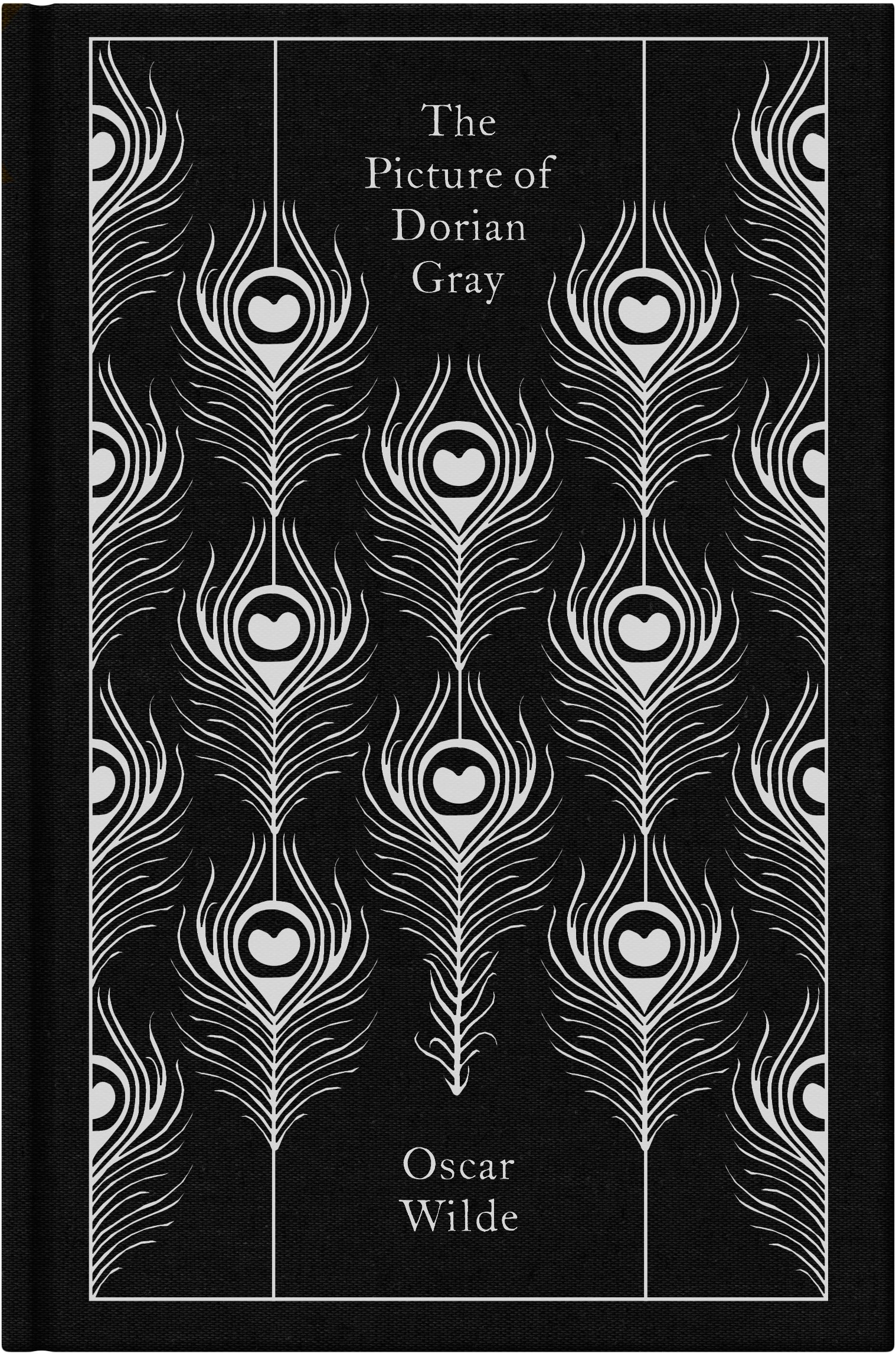
Part of Penguin's beautiful hardback Clothbound Classics series designed by the award-winning Coralie Bickford-Smith these delectable and collectible editions are bound in high-quality colourful tactile cloth with foil stamped into the design. Enthralled by his own exquisite portrait Dorian Gray exchanges his soul for eternal youth and beauty. Influenced by his friend Lord Henry Wotton he is drawn into a corrupt double life; indulging his desires in secret while remaining a gentleman in the eyes of polite society. Only his portrait bears the traces of his decadence. The novel was a succs de scandale and the book was later used as evidence against Wilde at the Old Bailey in 1895. It has lost none of its power to fascinate and disturb.
Why We Sleep: The New Science of Sleep and Dreams

'Astonishing . . . an amazing book . . . absolutely chocker full of things that we need to know' Chris Evans'Matthew Walker is probably one of the most influential people on the planet' Evening StandardTHE #1 SUNDAY TIMES BESTSELLERTLS OBSERVER SUNDAY TIMES FT GUARDIAN DAILY MAIL AND EVENING STANDARD BOOKS OF THE YEAR 2017Sleep is one of the most important aspects of our life health and longevity and yet it is increasingly neglected in twenty-first-century society with devastating consequences: every major disease in the developed world - Alzheimer's cancer obesity diabetes - has very strong causal links to deficient sleep.In this book the first of its kind written by a scientific expert Professor Matthew Walker explores twenty years of cutting-edge research to solve the mystery of why sleep matters. Looking at creatures from across the animal kingdom as well as major human studies Why We Sleep delves into everything from what really happens during REM sleep to how caffeine and alcohol affect sleep and why our sleep patterns change across a lifetime transforming our appreciation of the extraordinary phenomenon that safeguards our existence.'Startling vital ... a life-raft' Guardian'A top sleep scientist argues that sleep is more important for our health than diet or exercise' The Times'Passionate urgent . . . it had a powerful effect on me' Observer
Tropic of Cancer: Henry Miller (Penguin Modern Classics)

Shocking banned and the subject of obscenity trials Henry Miller's first novel Tropic of Cancer is one of the most scandalous and influential books of the twentieth century -- new to Penguin Modern Classics with a cover by Tracey EminTropic of Cancer redefined the novel. Set in Paris in the 1930s it features a starving American writer who lives a bohemian life among prostitutes pimps and artists. Banned in the US and the UK for more than thirty years because it was considered pornographic Tropic of Cancer continued to be distributed in France and smuggled into other countries. When it was first published in the US in 1961 it led to more than 60 obscenity trials until a historic ruling by the Supreme Court defined it as a work of literature. Long hailed as a truly liberating book daring and uncompromising Tropic of Cancer is a cornerstone of modern literature that asks us to reconsider everything we know about art freedom and morality.'At last an unprintable book that is fit to read' Ezra Pound 'A momentous event in the history of modern writing' Samuel Beckett 'The book that forever changed the way American literature would be written' Erica Jong
The Value of Everything: Making and Taking in the Global Economy

WINNER OF THE 2019 MADAME DE STAL PRIZE AND THE 2018 LEONTIEF PRIZE FOR ADVANCING THE FRONTIERS OF ECONOMIC THOUGHT SHORTLISTED FOR THE FT & MCKINSEY BUSINESS BOOK OF THE YEAR 2018Who really creates wealth in our world? And how do we decide the value of what they do? At the heart of today's financial and economic crisis is a problem hiding in plain sight.In modern capitalism value-extraction is rewarded more highly than value-creation: the productive process that drives a healthy economy and society. From companies driven solely to maximize shareholder value to astronomically high prices of medicines justified through big pharma's 'value pricing' we misidentify taking with making and have lost sight of what value really means. Once a central plank of economic thought this concept of value - what it is why it matters to us - is simply no longer discussed. Yet argues Mariana Mazzucato in this penetrating and passionate new book if we are to reform capitalism - radically to transform an increasingly sick system rather than continue feeding it - we urgently need to rethink where wealth comes from. Which activities create it which extract it which destroy it? Answers to these questions are key if we want to replace the current parasitic system with a type of capitalism that is more sustainable more symbiotic - that works for us all. The Value of Everything reigniteS a long-needed debate about the kind of world we really want to live in.
Churchill: Walking with Destiny
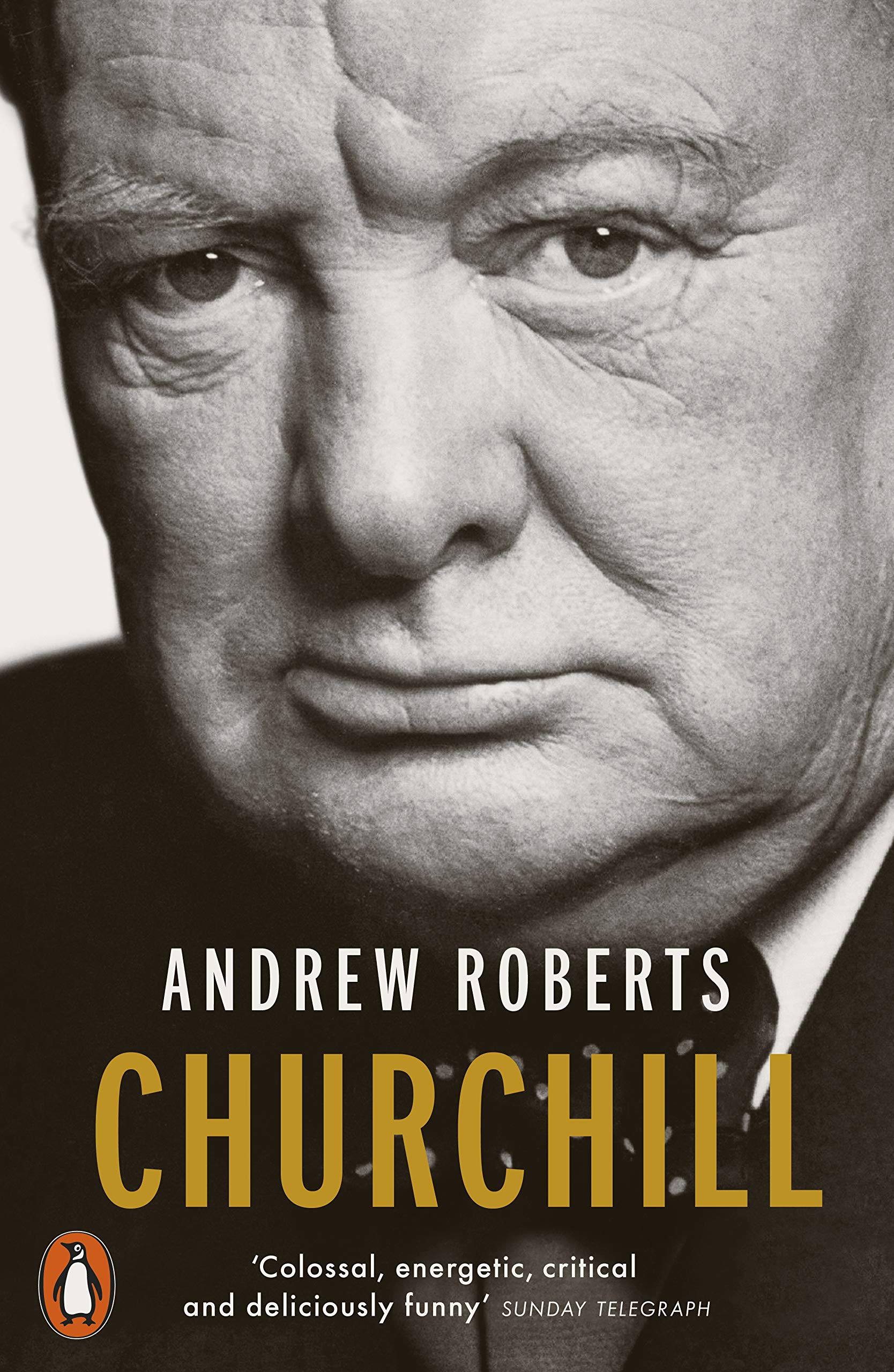
THE INTERNATIONAL BESTSELLERA SUNDAY TIMES THE TIMES ECONOMIST DAILY TELEGRAPH EVENING STANDARD OBSERVER BOOK OF THE YEAR'Undoubtedly the best single-volume life of Churchill ever written' Dominic Sandbrook Sunday TimesA magnificently fresh and unexpected biography of Churchill by one of Britain's most acclaimed historiansWinston Churchill towers over every other figure in twentieth-century British history. By the time of his death at the age of 90 in 1965 many thought him to be the greatest man in the world.There have been over a thousand previous biographies of Churchill. Andrew Roberts now draws on over forty new sources including the private diaries of King George VI used in no previous Churchill biography to depict him more intimately and persuasively than any of its predecessors. The book in no way conceals Churchill's faults and it allows the reader to appreciate his virtues and character in full: his titanic capacity for work (and drink) his ability see the big picture his willingness to take risks and insistence on being where the action was his good humour even in the most desperate circumstances the breadth and strength of his friendships and his extraordinary propensity to burst into tears at unexpected moments. Above all it shows us the wellsprings of his personality - his lifelong desire to please his father (even long after his father's death) but aristocratic disdain for the opinions of almost everyone else his love of the British Empire his sense of history and its connection to the present.During the Second World War Churchill summoned a particular scientist to see him several times for technical advice. 'It was the same whenever we met' wrote the young man 'I had a feeling of being recharged by a source of living power.' Harry Hopkins President Roosevelt's emissary wrote 'Wherever he was there was a battlefront.' Field Marshal Sir Alan Brooke Churchill's essential partner in strategy and most severe critic in private wrote in his diary 'I thank God I was given such an opportunity of working alongside such a man and of having my eyes opened to the fact that occasionally such supermen exist on this earth.'
The Book of Why: The New Science of Cause and Effect (Penguin Science)

The hugely influential book on how the understanding of causality revolutionized science and the world by the pioneer of artificial intelligence'Wonderful ... illuminating and fun to read' Daniel Kahneman Nobel Prize-winner and author of Thinking Fast and Slow'Correlation does not imply causation.' For decades this mantra was invoked by scientists in order to avoid taking positions as to whether one thing caused another such as smoking and cancer or carbon dioxide and global warming. But today that taboo is dead. The causal revolution sparked by world-renowned computer scientist Judea Pearl and his colleagues has cut through a century of confusion and placed cause and effect on a firm scientific basis. Now Pearl and science journalist Dana Mackenzie explain causal thinking to general readers for the first time showing how it allows us to explore the world that is and the worlds that could have been. It is the essence of human and artificial intelligence. And just as Pearl's discoveries have enabled machines to think better The Book of Why explains how we too can think better.'Pearl's accomplishments over the last 30 years have provided the theoretical basis for progress in artificial intelligence and have redefined the term 'thinking machine'' Vint Cerf
Colin Furze: This Book Isn't Safe!
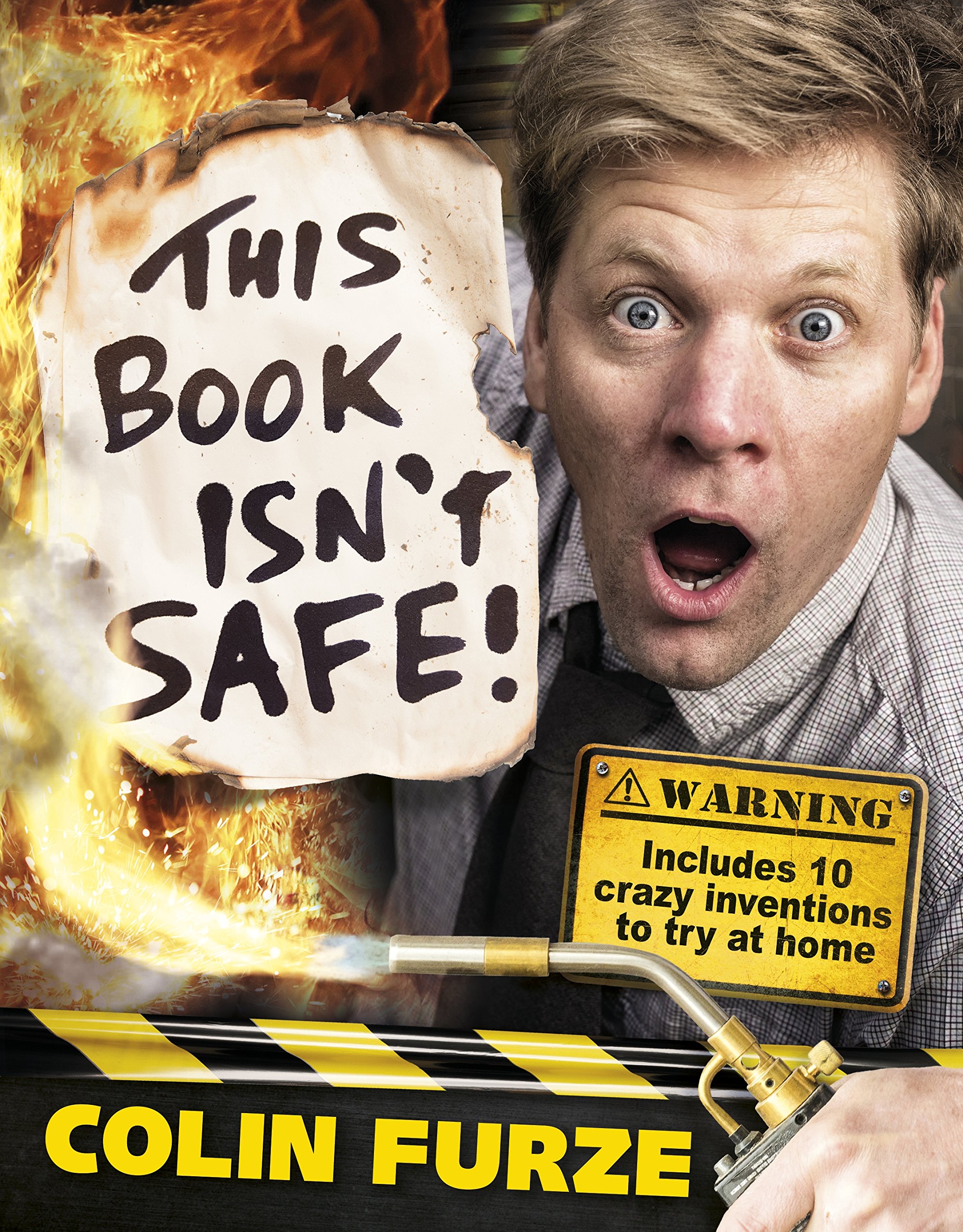
The first practical-inventions book for children by YouTuber Colin Furze. Colin is on a mission to inspire a new generation of budding inventors to be creative and make things! This Book Isn't Safe! contains ten awesome inventions for girls boys and parents everywhere to make at home with a basic tool kit.
Life 3.0: Being Human in the Age of Artificial Intelligence

'This is the most important conversation of our time and Tegmark's thought-provoking book will help you join it' Stephen HawkingTHE INTERNATIONAL BESTSELLER. DAILY TELEGRAPH AND THE TIMES BOOKS OF THE YEARSELECTED AS ONE OF BARACK OBAMA'S FAVOURITE BOOKS OF 2018AI is the future - but what will that future look like? Will superhuman intelligence be our slave or become our god?Taking us to the heart of the latest thinking about AI Max Tegmark the MIT professor whose work has helped mainstream research on how to keep AI beneficial separates myths from reality utopias from dystopias to explore the next phase of our existence.How can we grow our prosperity through automation without leaving people lacking income or purpose? How can we ensure that future AI systems do what we want without crashing malfunctioning or getting hacked? Should we fear an arms race in lethal autonomous weapons? Will AI help life flourish as never before or will machines eventually outsmart us at all tasks and even perhaps replace us altogether? 'This is a rich and visionary book and everyone should read it' The Times
How to Change Your Mind: The New Science of Psychedelics
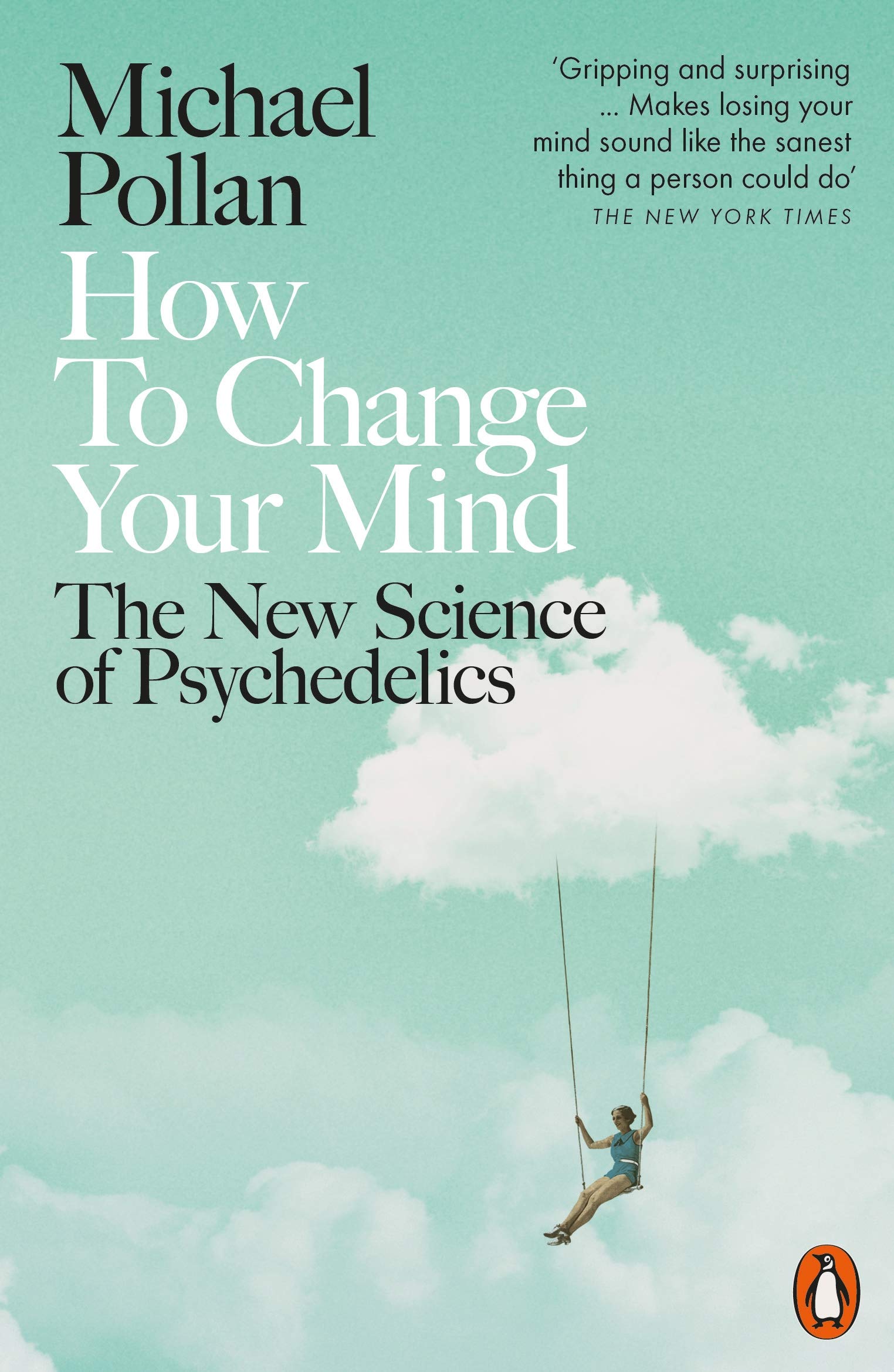
The No.1 New York Times Bestseller'Reminds us that the mind is the greatest mystery in the universe' Yuval Noah Harari Guardian Books of the YearCould psychedelic drugs change our worldview? Join Michael Pollan on a journey to the frontiers of the human mind.Diving deep into an extraordinary world - from shamans and magic mushroom hunts to the pioneering labs mapping our brains - and putting himself forward as a guinea-pig Michael Pollan has written a remarkable history of psychedelics and a compelling portrait of the new generation of scientists fascinated by the implications of these drugs. How to Change Your Mind is a report from what could very well be the future of consciousness.'A sweeping and often thrilling chronicle of the history of psychedelics all interwoven with Pollan's adventures as a psychedelic novice. This is a serious work of history and science but also one in which the author under the influence of toad venom becomes convinced he's giving birth to himself' Oliver Burkeman Guardian'A mind-altering book ... full of transformations' Richard Godwin Evening Standard'An irresistible blend of history research and personal experience. In terms of the psychedelic wave the book is the big kahuna the Big Bang moment for a movement that is gathering force' John McKenna Irish Times'Entertaining and engrossing' Paul Laity Financial Times'Deeply absorbing wise and beautifully written' Mick Brown Literary Review'An astounding book' Andrew Sullivan New York Magazine

